
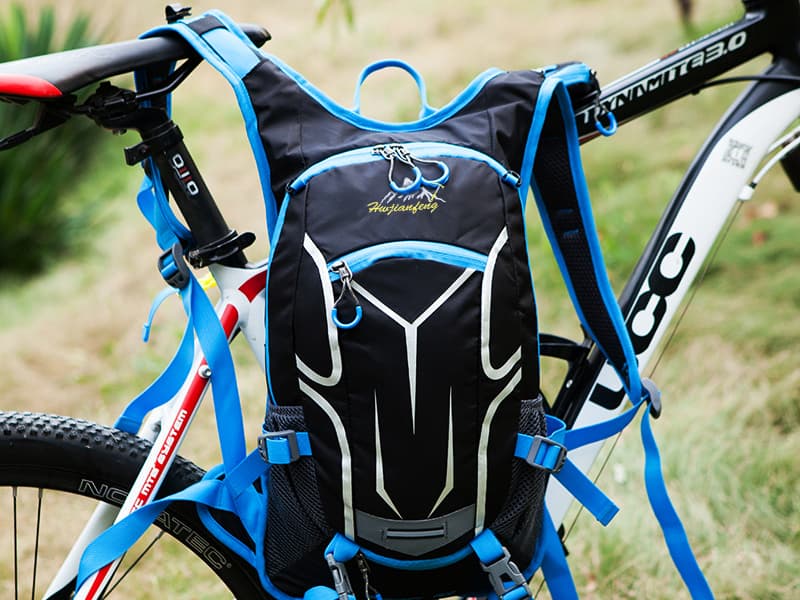
Cycling bags are becoming an important category in outdoor and sports equipment because cyclists need products that are lightweight, compact, durable and weather-resistant.
Unlike ordinary bags, cycling bags must work with the movement of the rider. Material selection and structural design therefore directly affect product performance.
Why Are Cycling Bags Popular?
Cycling bags serve multiple applications, including:
- Road cycling
- Mountain biking
- Bike commuting
- Long-distance touring
- Outdoor adventure
Their compact size and specialized functions make them highly suitable for both professional cycling brands and lifestyle outdoor markets.
Why Nylon and Oxford Fabric?
Nylon is particularly suitable for lightweight cycling products because of its high strength-to-weight performance. It can help reduce unnecessary weight while maintaining durability.
Oxford fabric is often selected when higher abrasion resistance and structural stability are required. Different fabric weights and coatings can be specified according to the product’s positioning.
For B2B manufacturing, this creates multiple product levels—from lightweight performance bags to more rugged outdoor cycling bags.
What Makes a Cycling Bag Sell?
The key is function-driven design.
A professional cycling bag can integrate:
- Water-resistant fabric
- Reinforced seams
- Adjustable mounting systems
- Multiple storage compartments
- Lightweight construction
- Reflective or safety details
- Quick-access pockets
Every design element should solve a real problem for the rider.
From Fabric to Market
The most effective cycling bag is not necessarily the thickest or strongest. It is the product that achieves the right balance between weight, durability, functionality and manufacturing cost.
For B2B brands, we provide OEM/ODM manufacturing based on product structure, fabric specification, capacity, color, logo and target market.
Built for Movement. Engineered for Cycling. Developed for Your Brand.